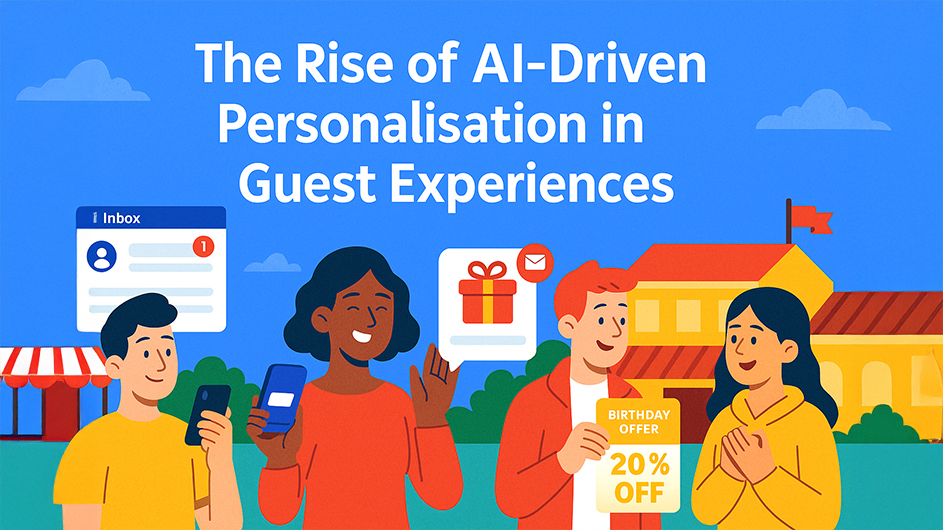
In the fast-paced world of leisure and hospitality, guests expect more than great service — they want experiences that feel made just for them. Whether it’s receiving a birthday email with their favourite offer or seeing tailored ads that speak to their interests, personalisation has become a defining feature of modern guest engagement.
Artificial intelligence (AI) is now making this level of customisation easier, smarter, and more scalable than ever. For leisure operators, AI-driven personalisation isn’t just a marketing trend — it’s a competitive advantage that deepens loyalty, drives bookings, and maximises every guest interaction.
What AI-Driven Personalisation Actually Means
AI-driven personalisation uses data — such as guest history, online behaviour, and purchase patterns — to deliver experiences that match individual preferences.
Instead of relying on guesswork or generic messaging, AI analyses first-party data (the information you already collect through bookings, memberships, and email engagement) to predict what your guests actually want.
Examples include:
-
Automatically sending a “Happy Birthday” message with a special discount.
-
Recommending the next experience based on previous bookings.
-
Displaying tailored offers on your website that reflect the guest’s visit history.
-
Adjusting advertising campaigns dynamically based on user behaviour.
In short, AI helps you treat every customer like a VIP — even when you’re managing thousands of them.
Why First-Party Data Is the Key
With stricter data privacy laws and the decline of third-party cookies, first-party data has become gold dust for marketing. It’s accurate, permission-based, and already sitting inside your booking system or CRM.
AI tools can turn that data into actionable insights by finding patterns human marketers might miss. For example:
-
Spotting which guests tend to book during certain times of year.
-
Identifying families who always book parties around the same weekend.
-
Recognising guests who only book when discounts are offered.
Once identified, AI can help automate personalised follow-ups — sending targeted offers, reminders, or even “We miss you” messages to re-engage lapsed visitors.
The Guest Journey, Reimagined
AI can personalise every stage of the guest journey — from the first click to post-visit engagement.
Before the Visit
AI can analyse browsing data to tailor homepage content, such as showing “family days out” to parents or “corporate packages” to business users. It can also predict when guests are most likely to book and trigger email or social campaigns at just the right moment.
During the Visit
Once guests arrive, AI can enhance their on-site experience too. Smart check-ins, digital loyalty cards, or mobile ordering apps can adapt recommendations based on preferences — like favourite drinks or previous activities.
After the Visit
AI can automatically send thank-you emails, collect feedback, or suggest the next visit (“Loved Laser Quest? Try our new VR experience next time!”). The system learns from every interaction, improving accuracy and relevance over time.
Examples of AI Tools in Action
Here are a few ways leisure operators are already using AI for personalisation:
-
ChatGPT-style tools: To craft tailored responses to guest reviews, automate customer service, and even generate on-brand email content.
-
Canva AI and design automation: To produce personalised birthday graphics or event banners at scale.
-
Google Ads automation: To dynamically adjust targeting and ad copy based on live performance data.
-
Email automation platforms (like Mailchimp, Klaviyo, or HubSpot): To send pre-set messages triggered by birthdays, abandoned bookings, or special events.
AI doesn’t replace human creativity — it amplifies it. The key is blending technology with your brand’s personal touch.
Building Emotional Connection Through Personalisation
Personalisation isn’t just about convenience; it’s about emotion. When a guest feels that your venue remembers them — their preferences, milestones, and past experiences — it builds trust and belonging.
That emotional connection is what turns first-time visitors into repeat guests. A personalised “We thought you’d love this new experience” email feels like a friendly nudge rather than a sales pitch.
Tip: Always maintain a natural, conversational tone in personalised messages. Even the most advanced AI system should sound like a human who genuinely cares.
Overcoming Common Challenges
While AI-powered personalisation offers huge potential, it requires careful setup. Common challenges include:
-
Data quality: Outdated or duplicate guest records can confuse AI models.
-
Privacy concerns: Always make sure guests opt in to marketing communications and understand how their data is used.
-
Brand consistency: Automation should support your tone of voice, not replace it.
The solution is balance — combining smart automation with ongoing human oversight to ensure accuracy, compliance, and authenticity.
What’s Next for the Leisure Industry
As AI becomes more sophisticated, we’ll see even deeper levels of personalisation. Expect:
-
Real-time pricing recommendations based on guest demand.
-
AI chatbots that remember individual preferences.
-
Cross-channel campaigns that update automatically as guests interact.
-
Predictive scheduling to anticipate busy periods and optimise staffing.
Ultimately, AI-driven personalisation will make the guest experience smoother, more engaging, and more profitable for operators — all while strengthening brand loyalty.
Conclusion
AI is reshaping how leisure venues connect with guests. By using first-party data to personalise offers, reminders, and advertising, you’re not just improving marketing efficiency — you’re creating experiences that feel meaningful and memorable.
In a crowded market, the venues that win will be those that make every guest feel seen, valued, and understood. And thanks to AI, doing that at scale is now easier than ever.